Dorothea Rohde – Report on the epigraphic workshop funded by AIEGL
Nature and objective of the epigraphic workshop
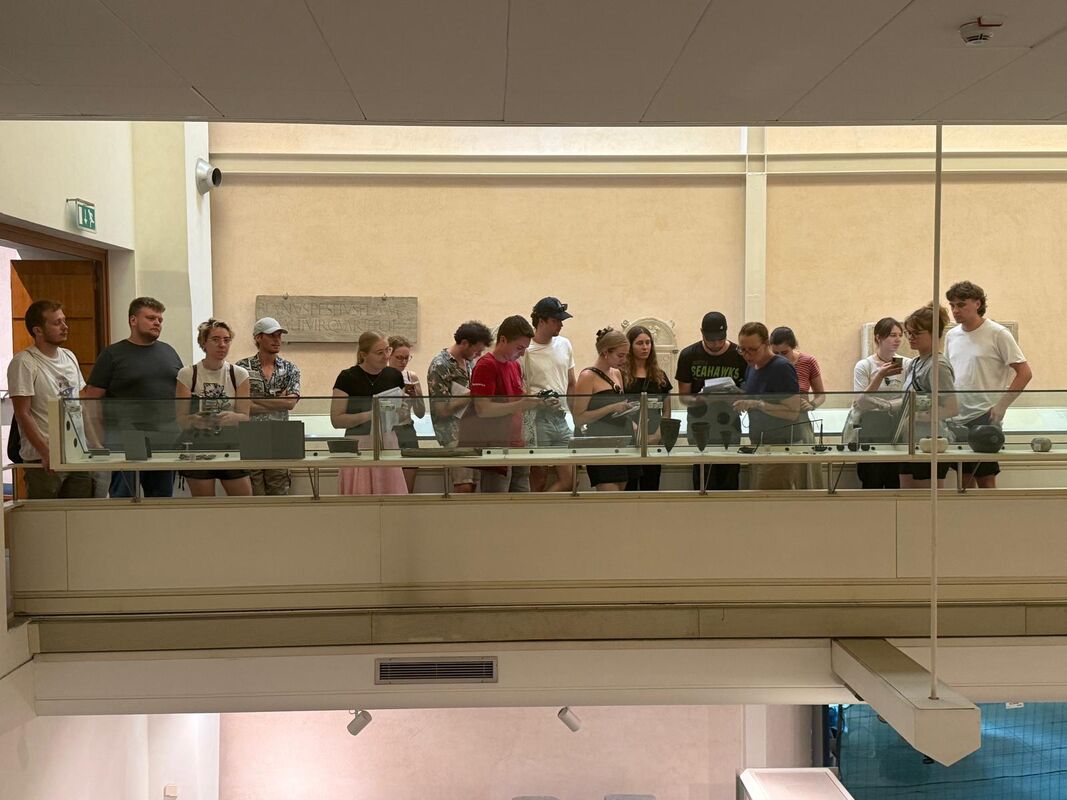
Thanks to AIEGL funding, the international Summer School From Town to Metropolis II: Exploring the Diversity of Urban Economy in Roman Pompeii, Ostia, and Rome, held 17–25 July 2026 in Pompeii, Rome, and Ostia, could be extended by one additional day for an epigraphic workshop in the collection of the Museo Nazionale Romano at the Terme di Diocleziano — the world’s largest collection of Latin inscriptions. The workshop aimed to connect the archaeological evidence explored on site with corresponding epigraphic sources, introducing students to the development of the epigraphic habit, the evolution of inscriptional formulae, and the classification of inscription types and their evidentiary value for Roman economic history. Beyond technical training in reading and contextualizing inscriptions, a key goal was methodological reflection on what epigraphy can and cannot reveal about economic activity, self-representation, and social status in the Roman world.
Participants and programme
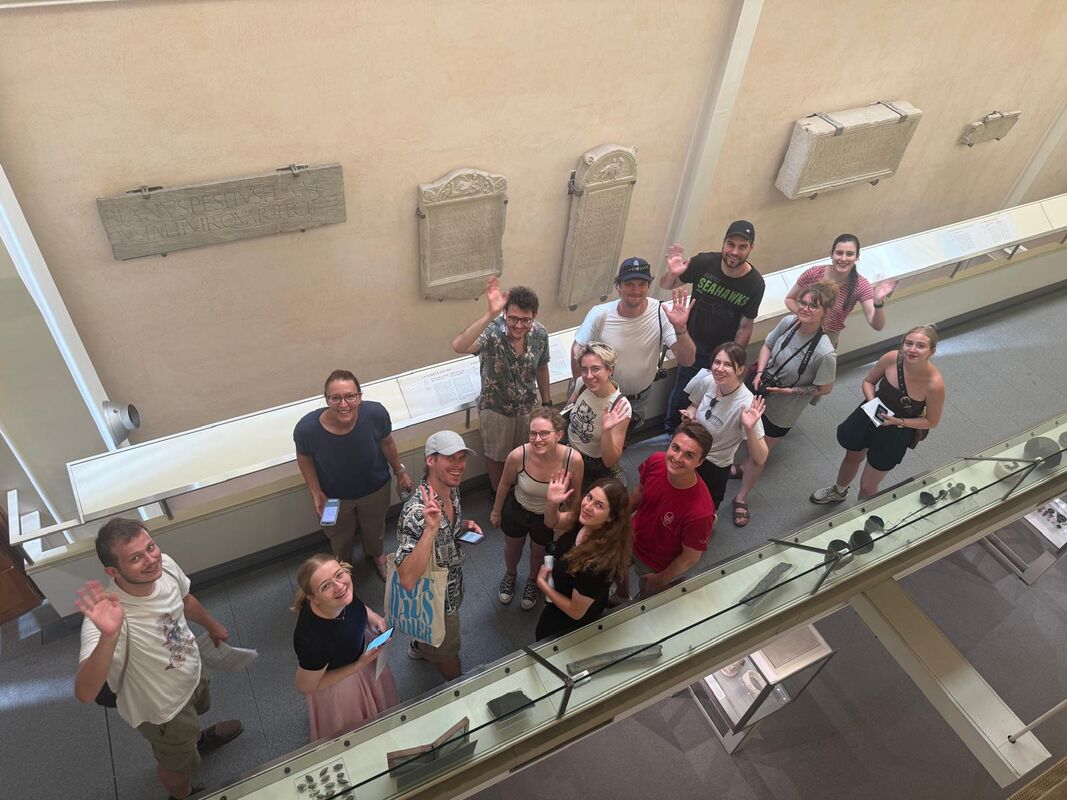
Sixteen undergraduate and graduate international students took part in a programme directed by Prof. Dr. Dorothea Rohde (Roman History and Epigraphy, University of Cologne) together with Prof. Dr. Michael Heinzelmann and Diana Wozniok (both Classical Archaeology, University of Cologne), in cooperation with the DAI Rome and CASAM.
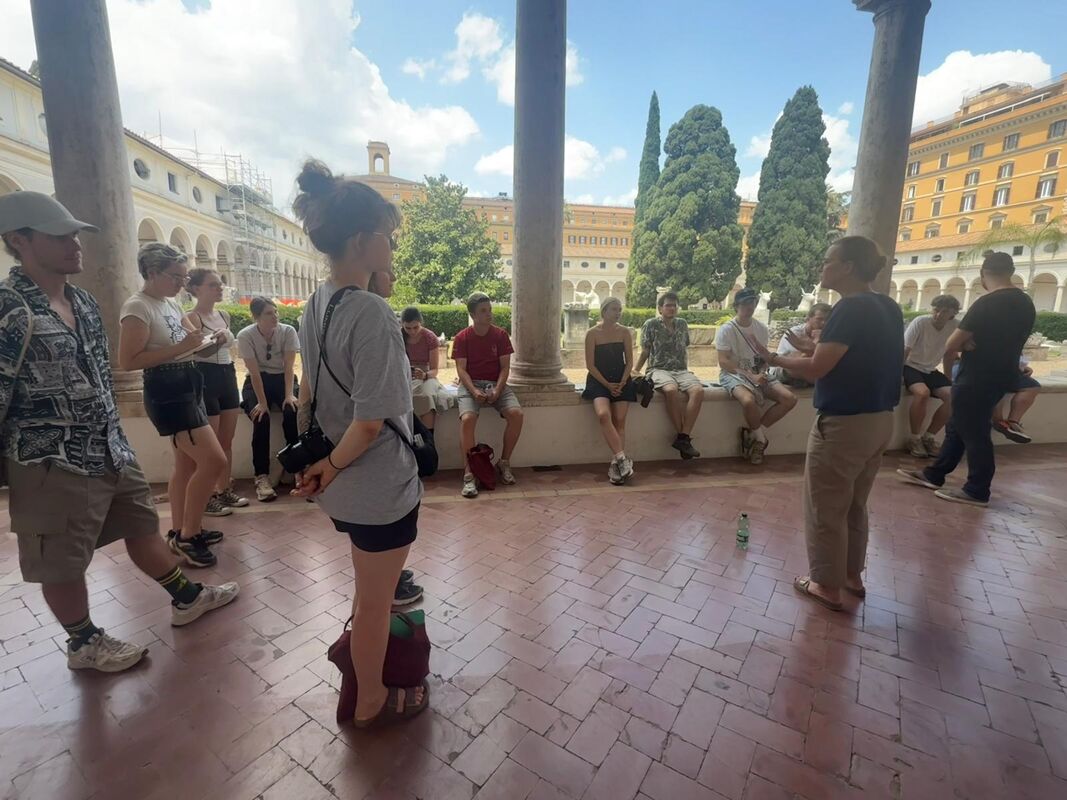
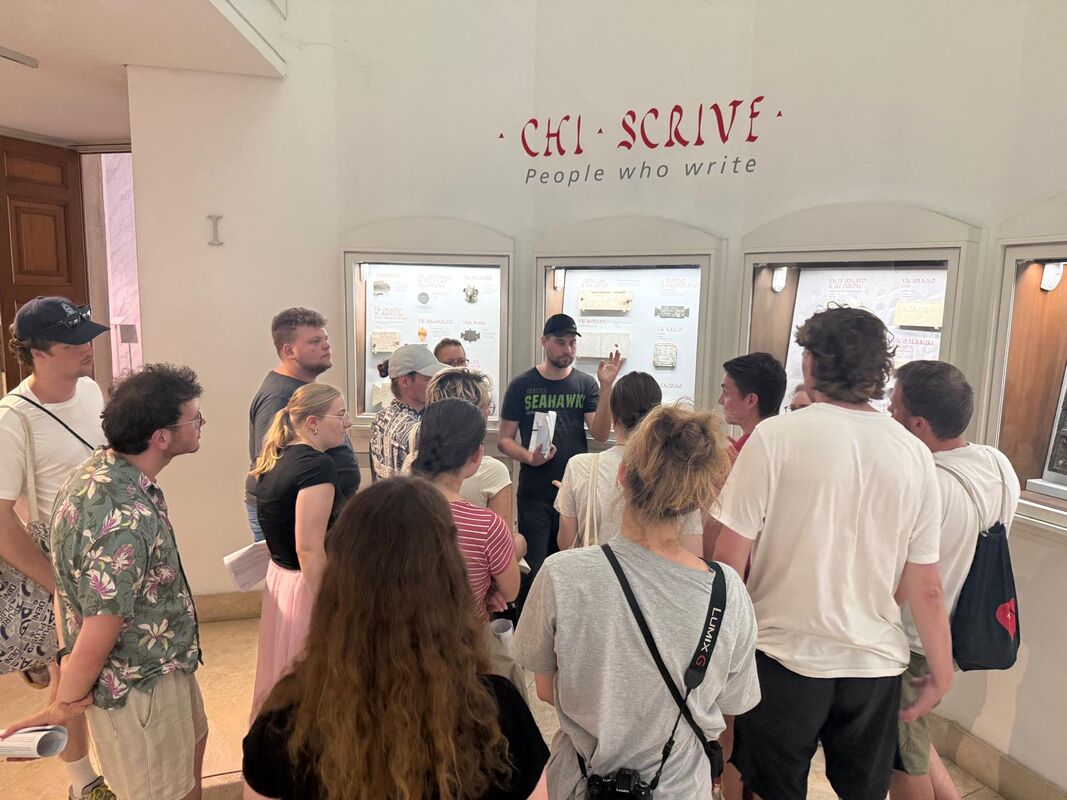
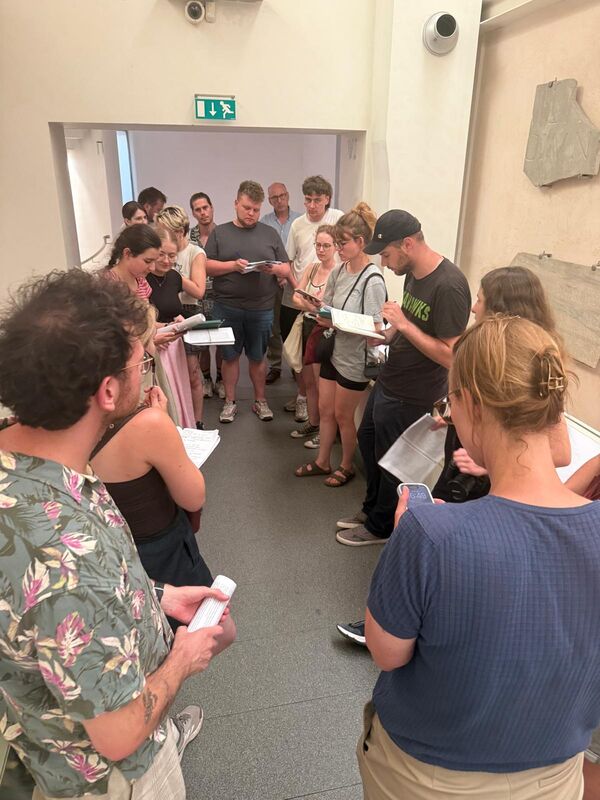
The workshop opened with an introduction to the Baths of Diocletian via their building inscription, followed by a guided tour of important inscriptions documenting economic actors and their professions. Students then worked independently in small groups, each editing and interpreting assigned inscriptions as well as self-selected inscriptions in the museum, grouped around different thematic complexes and inscription types. The day concluded with student presentations and a plenary discussion at the DAI on epigraphy as a source for Roman economic history.
#The workshop was a crucial complement to the Summer School’s site visits: while excavations in Pompeii, Ostia, and Rome reveal the material infrastructure of the Roman urban economy, inscriptions give voice to the individuals who operated within it — traders, freedmen, officials, and members of professional associations — and to their own understanding of status, achievement, and economic activity. Working directly with original inscriptions in the world’s largest epigraphic collection gave students hands-on experience in a core method of ancient economic history that is rarely accessible in this depth, and equipped them with critical tools for assessing epigraphic evidence that will benefit their future research.
The AIEGL grant was therefore essential in making this workshop possible and substantially strengthened the epigraphic component of the Summer School.
Prof. Dr. Dorothea Rohde